Home » Walkways
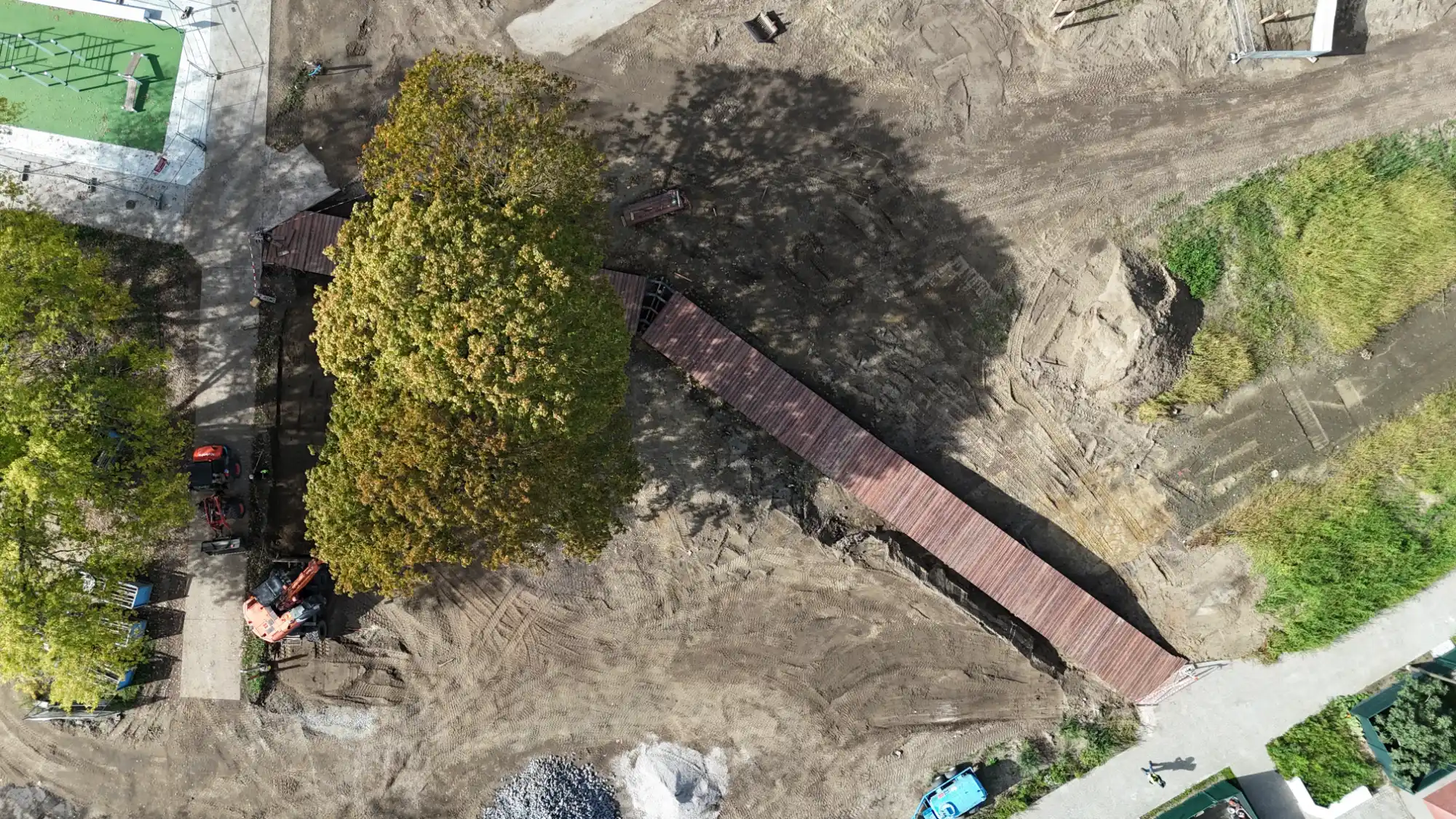
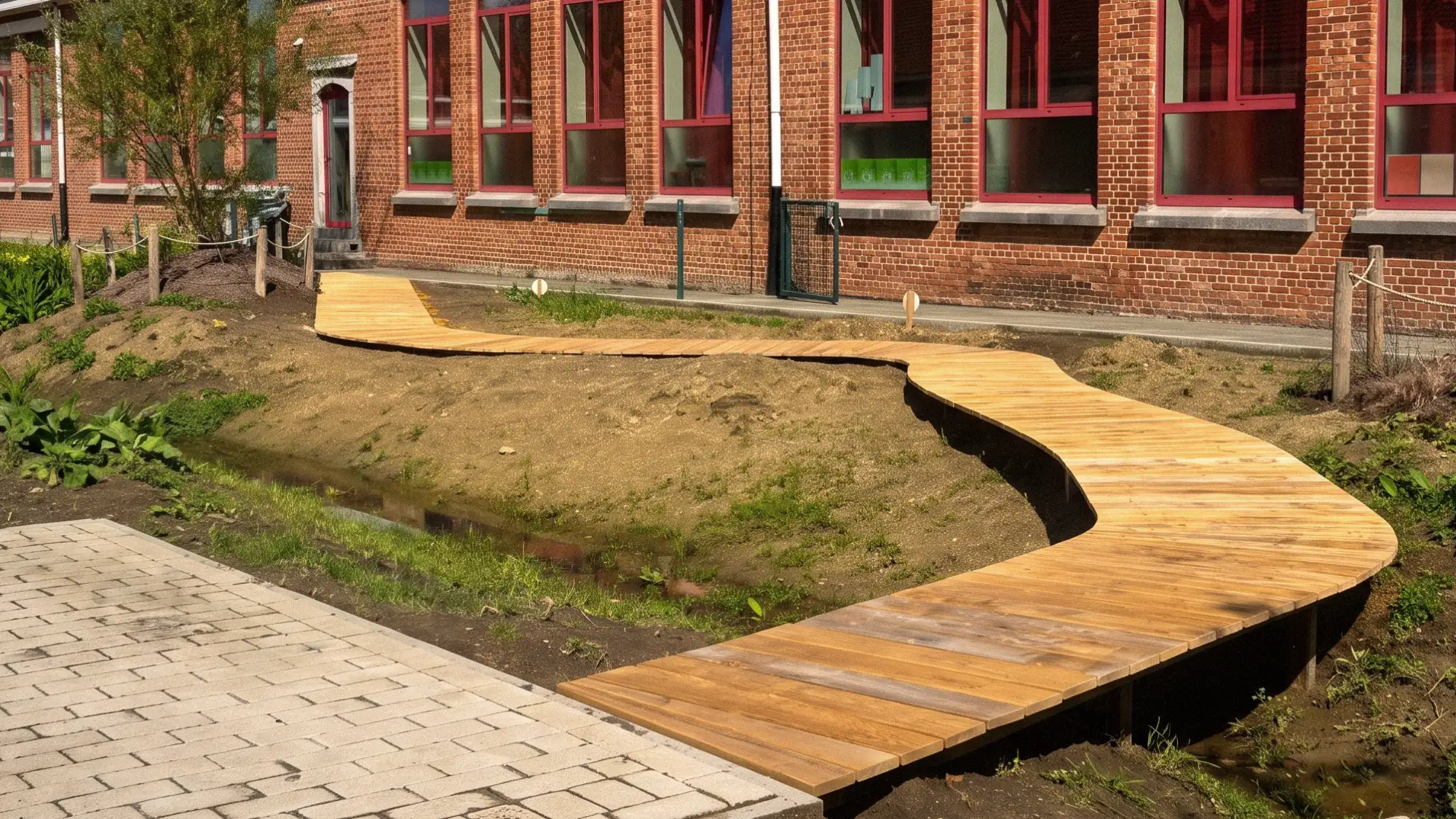
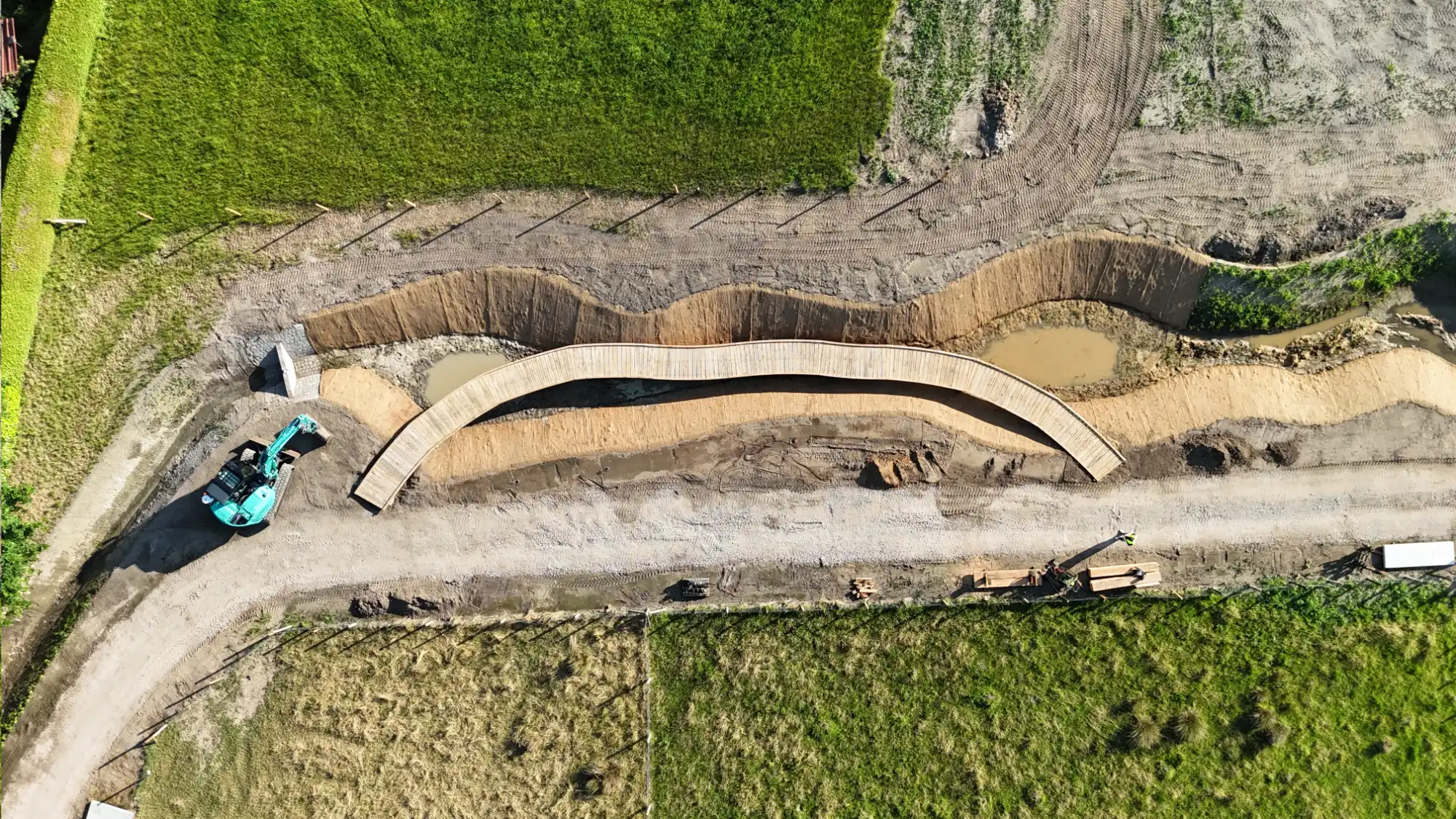
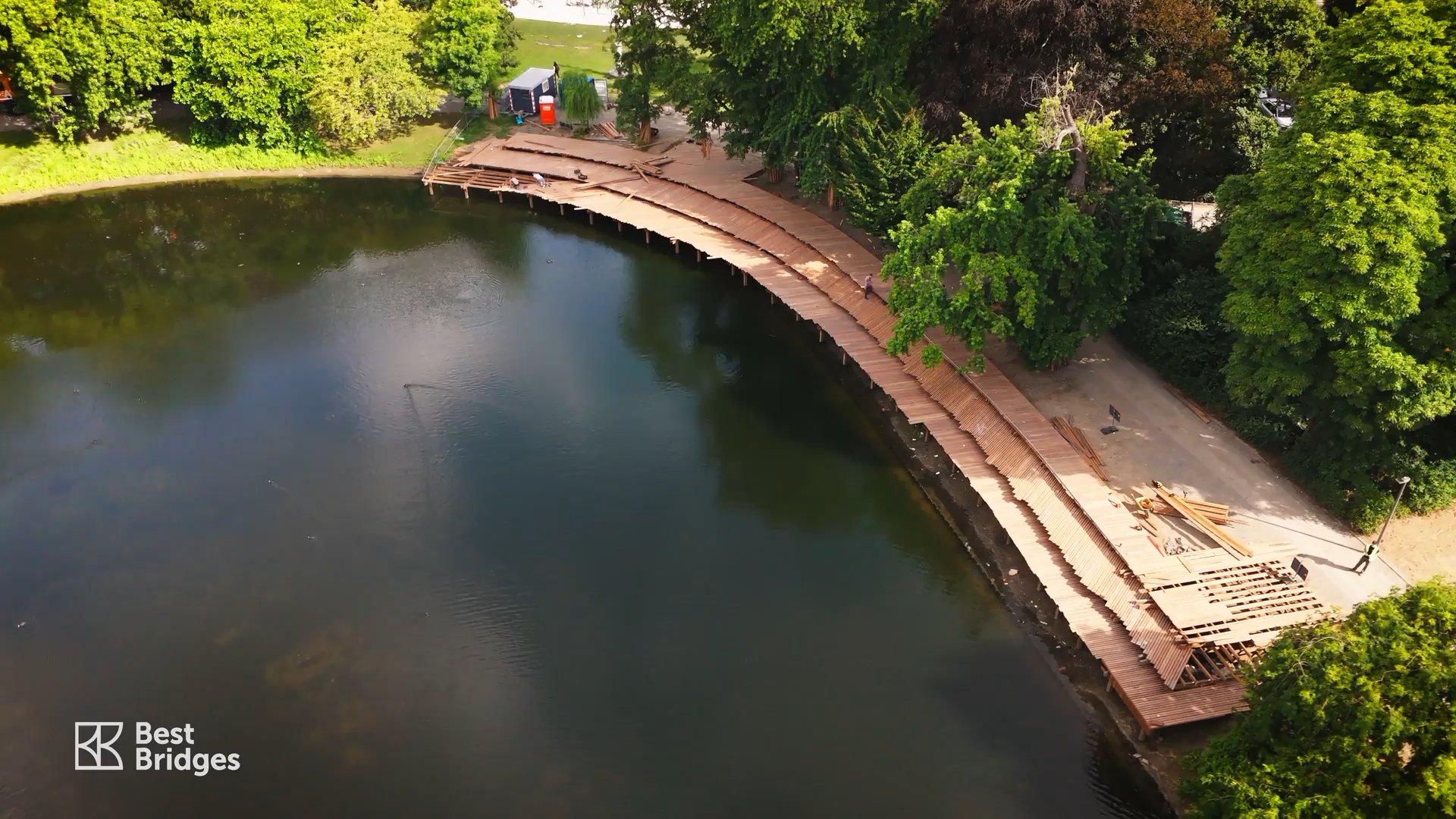
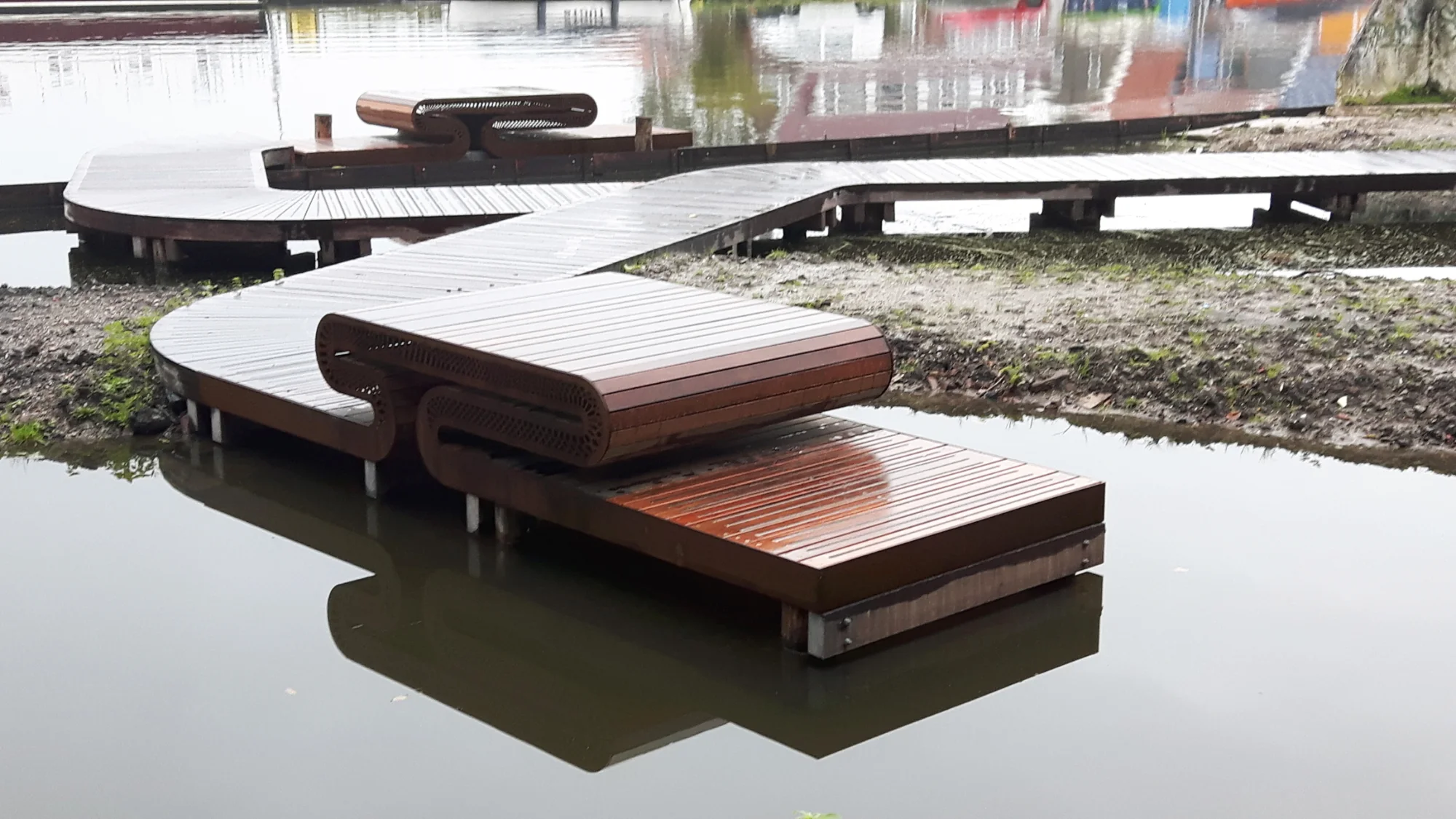
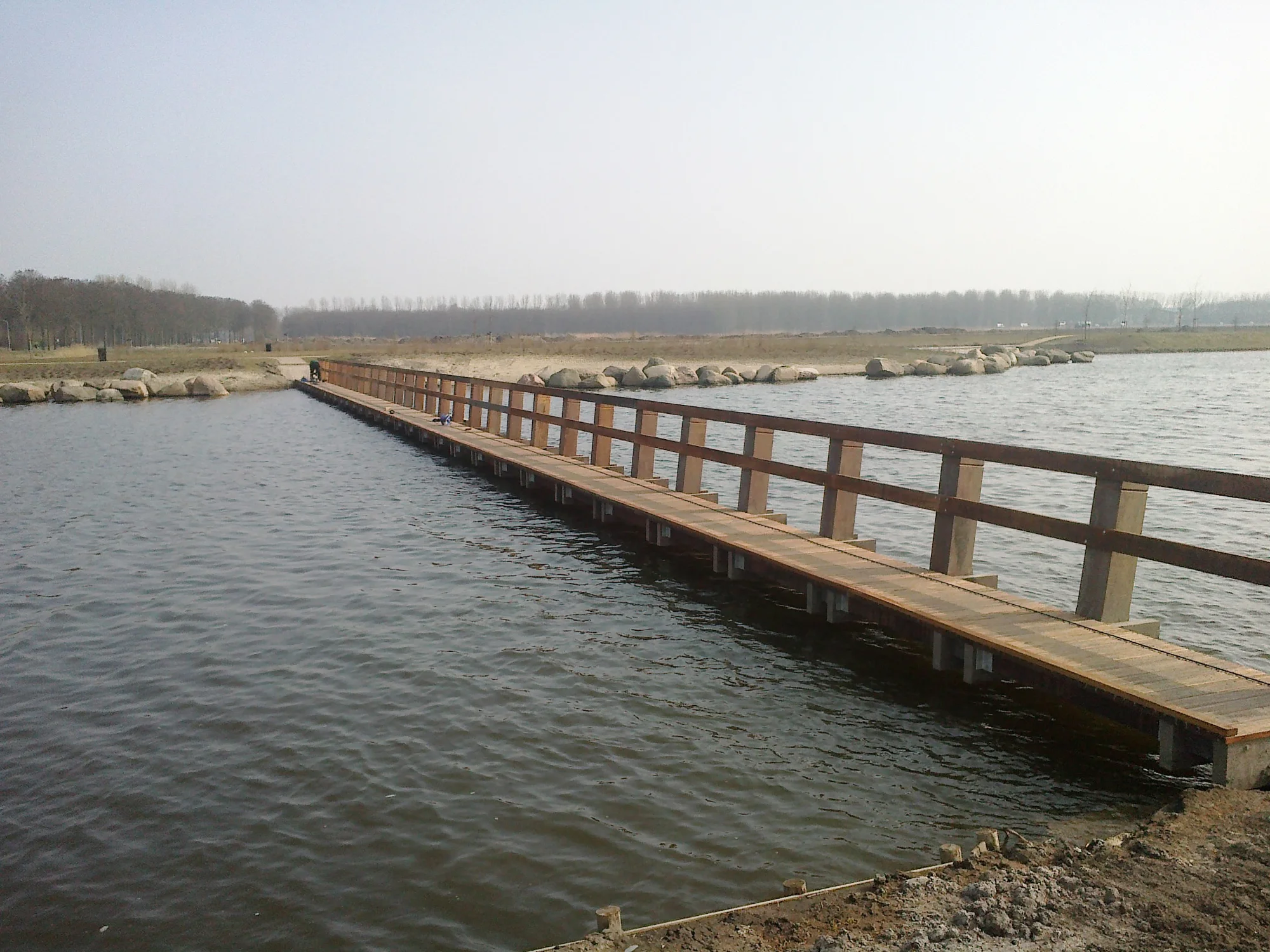
From nature reserves, recreational areas, and waterways to parks, promenades, and marinas, our walkways and docks combine accessibility, nature conservation, and sustainability. They protect vulnerable vegetation and the underlying soil, minimize the impact on the environment, and ensure a safe and comfortable experience.
Applications
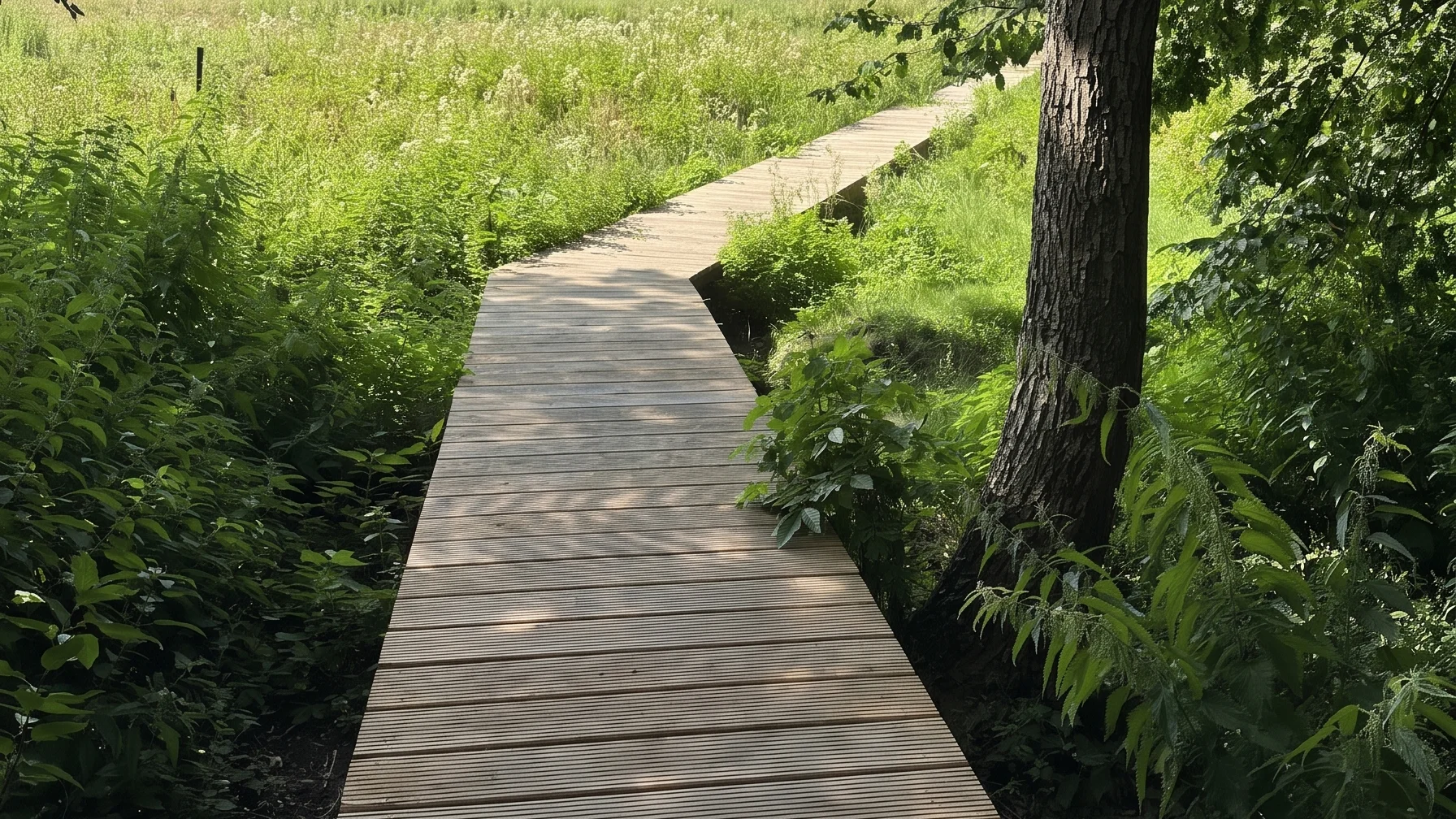
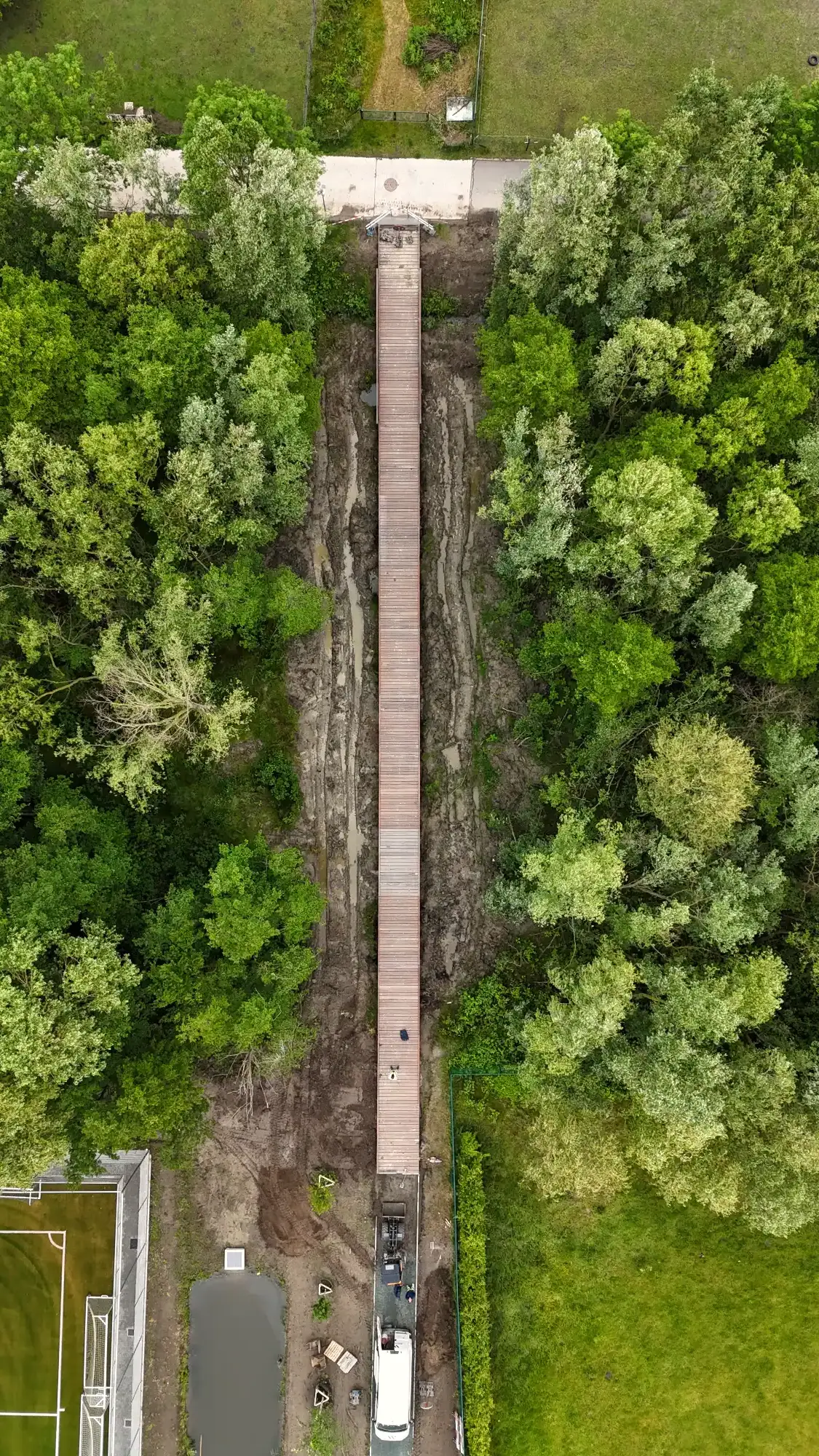
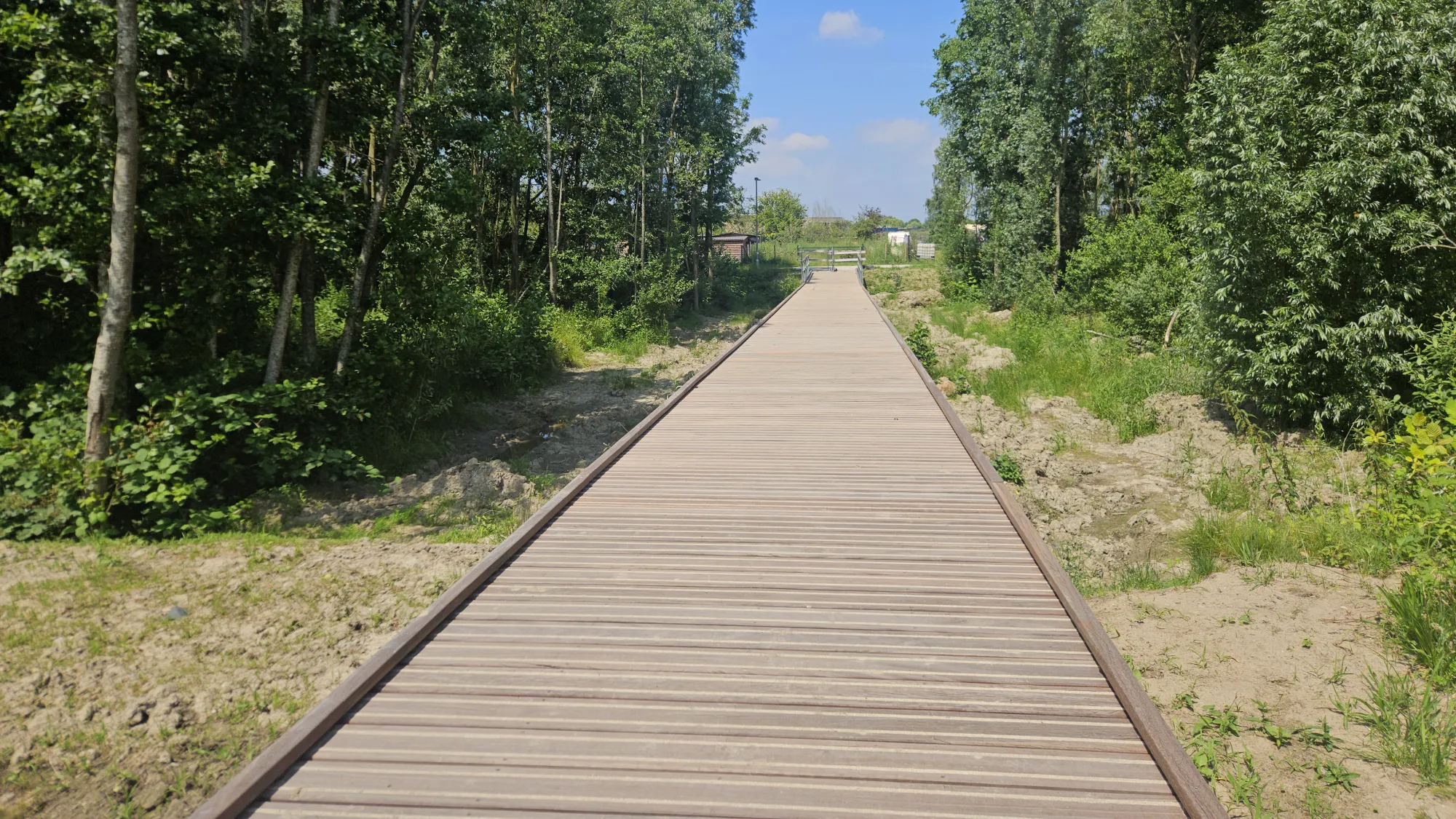
A walking trail through a marsh, around a pond, or along a riverbank.
Access without putting a strain on the fragile soil.
Walkways and piers along the water and the dock.
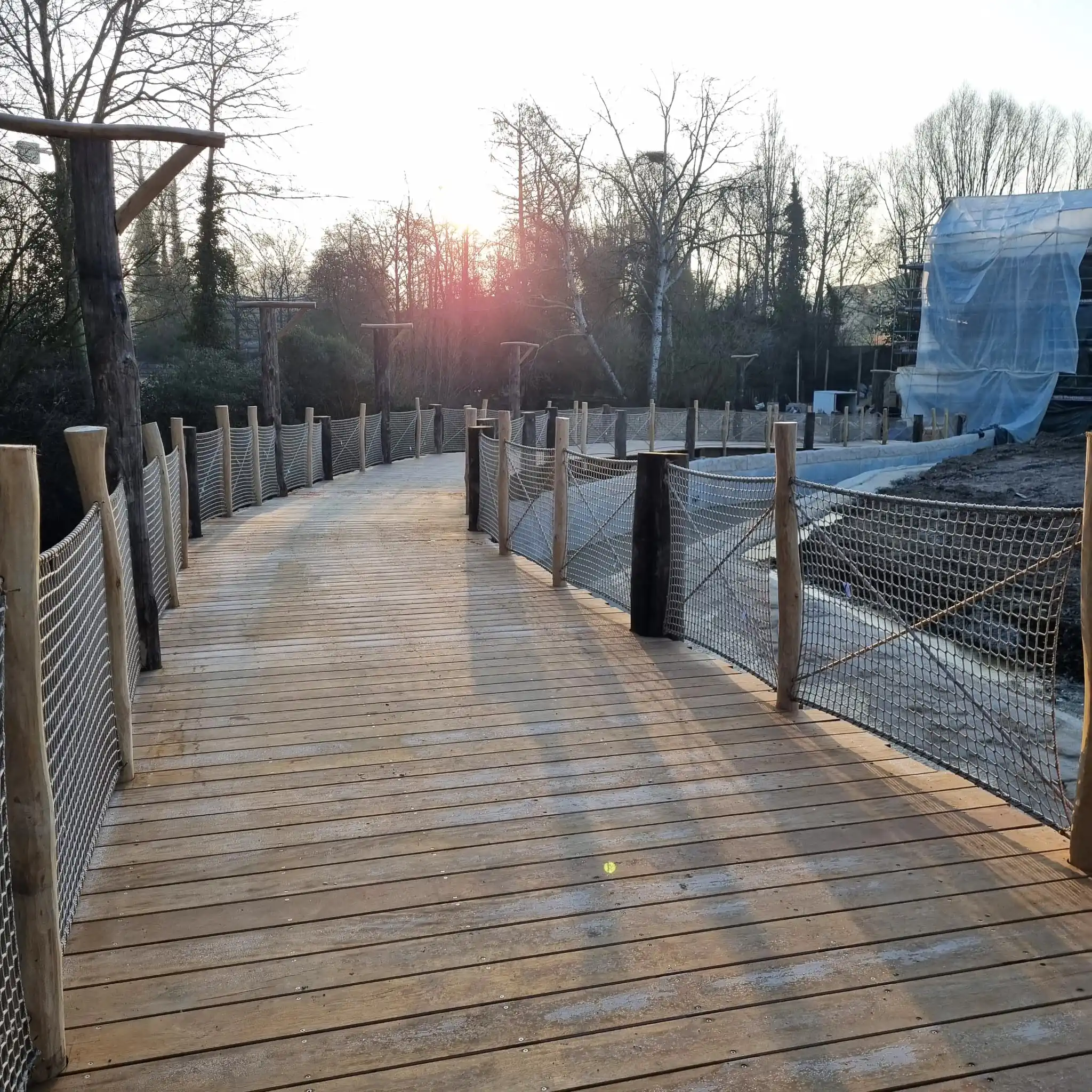
Terraces and platforms for public spaces.
Technical Considerations
A sustainable walkway starts with a well-thought-out design. The soil, foundation, water levels, and choice of materials determine the walkway’s lifespan and maintenance requirements. In addition, safety, accessibility, and careful integration into the landscape are essential for a high-quality, future-proof solution.
Traction in all weather conditions.
Thanks to integrated anti-slip features, the walking surface remains safe in rain, frost, and wet conditions. No surface-mounted strips, just durable, built-in solutions.
Not every location requires the same anti-slip solution. That’s why we select the right system based on the material, the slope, exposure to moisture, and expected use, so that safety and durability go hand in hand.
Designed for prolonged exposure to water.
Decked walkways and docks are resistant to prolonged exposure to water, moisture, and changing weather conditions. Choosing the right materials ensures a long service life and minimizes maintenance. From riverbanks and parks to nature reserves and marinas: our boardwalks and docks are designed for heavy-duty use in damp environments, with an emphasis on durability and ease of maintenance.
Wheelchair-accessible, with no protruding seams or changes in level.
A flat and comfortable walking surface without any annoying changes in level or protruding seams. Suitable for wheelchairs, strollers, and other users. High-quality materials and thoughtful design details ensure a durable construction that will continue to perform reliably for years to come.
Pile foundations that disturb the soil as little as possible.
Depending on the subsoil, we select the most suitable foundation solution, such as pile foundations or screw piles. This allows us to minimize the impact on the soil and the existing natural environment.
Materials for a walkway
Wood is a natural building material with a warm appearance that stores CO₂ as it grows. With the right choice of hardwood species, thoughtful design, and periodic maintenance, it offers a long service life and blends harmoniously into both natural and urban environments.
Composite is an innovative fiber-reinforced building material that does not rot, does not corrode, and requires little maintenance. Thanks to its low weight, long service life, and high durability, it is particularly well-suited for use in challenging environments.
Steel is a strong and versatile building material that is ideal for slender structures and long spans. Thanks to its high load-bearing capacity, proper preservation, and periodic maintenance, it offers a long service life and reliable performance.
BestBridges LAB evaluates your project for technical feasibility, practicality, service life, and cost. This helps you make the right choices as early as the design phase.
Browse our portfolio of projects.
Street FurnitureWalkwayWood
Pedestrian BridgeStreet FurnitureWalkwayWood
LABWalkwayWood
Custom walkway?
Send us your preliminary design or idea. You’ll receive an initial assessment of feasibility and budget. This way, you can start the bidding process with fewer worries.
Are you having trouble figuring something out? Or do you have a question that isn’t listed here? We’d love to hear from you. Just get in touch with us.
Walkways are used in nature reserves, recreational areas, residential areas, parks, along waterways, in public squares, and in public spaces, where accessibility, the visitor experience, and the protection of the environment are key priorities. A dock is a structure on or above the water that serves as a mooring for boats, a fishing pier, or part of a marina or recreational water infrastructure. Jetties are used at ponds, canals, rivers, lakes, and marinas and are designed based on landing and mooring loads, intended use, and local water conditions. Although both structures can be constructed from wood, steel, or composite materials, they differ primarily in function, load-bearing capacity, detailing, and design criteria. In the case of jetties, additional factors such as mooring loads, water level fluctuations, wave action, and the forces exerted on the structure by vessels are also taken into account. BestBridges designs and builds both walkways and jetties, fully tailored to the location, intended use, and desired service life.
That depends on the location, the intended use, and the desired lifespan. Composite generally requires the least maintenance. It is resistant to moisture and corrosion and does not need to be treated periodically, making it particularly suitable for locations where maintenance is difficult or costly. Hardwood is an extremely durable and natural material that has been used successfully in deck paths for decades. With a well-thought-out design, the right choice of wood species, and periodic inspections, a wooden walkway will retain its quality, safety, and warm appearance for many years. The right choice of material is determined not only by maintenance requirements but also by the environment, the desired appearance, the investment cost, the service life, and the total cost of ownership (TCO). That is why, for every project, we recommend the material that best suits the application from a technical, aesthetic, and economic standpoint.
Yes. A walkway can be designed to be fully wheelchair-accessible, provided that this is taken into account from the design phase onward. Key considerations include the clear passage width, the maximum slope, a flat and non-slip walking surface, safe handrails where necessary, and a smooth transition to surrounding paths. Depending on the application, the design is tailored to meet applicable accessibility standards and guidelines, ensuring that the walkway can be used safely and comfortably by wheelchair users, strollers, pedestrians, and, if necessary, emergency services or maintenance vehicles. At BestBridges, we integrate accessibility from the very first design phase, ensuring that the walkway not only meets technical requirements but is also safe and comfortable for everyone to use.
The choice of foundation is determined by factors such as soil conditions, flood risk, ecological constraints, the desired service life, and the site’s accessibility. The construction method also plays an important role. At hard-to-reach locations or in sensitive natural areas, screw piles are often chosen, while at other locations, wooden or composite piles can be efficiently installed using a crane and a vibrating block—we can even work from a single pontoon.A superstructure made of wood or composite materials can then be built on top of this foundation. For wooden walkways, sustainable hardwoods such as Azobé are often used in hydraulic engineering. However, depending on the project requirements, other sustainable hardwoods may also be the most suitable choice.The optimal combination of foundation, material, and construction method is always determined by the project location, functional requirements, desired service life, maintenance strategy, and total cost of ownership (TCO). Well-considered choices during the design phase can reduce maintenance needs, extend service life, and significantly optimize the total cost over the entire period of use.
Like other outdoor paving materials, a walkway can become slippery when it rains or in damp conditions. That is why, even during the design phase, close attention is paid to the finish of the walking surface, water drainage, and safety. Depending on the application, both wooden and composite walkways can be equipped with durable anti-slip features, such as milled-in epoxy-quartz strips. These provide high slip resistance, have a very long service life, and are tailored to the desired safety class for pedestrians, cyclists, or mixed use.
At BestBridges, we design every walkway with safety, durability, and user comfort in mind, so that the structure can be used safely and comfortably even in wet conditions.
A pedestrian bridge should not only be safe and functional, but also fit beautifully into its surroundings. BestBridges designs, engineers, produces, and installs pedestrian bridges in composite, wood, and steel, with attention to accessibility, durability, and maintenance.
The ideal solution. The modular steel-composite structure is prefabricated off-site and installed quickly, with minimal on-site time and disruption. Suitable for heavy traffic, in both temporary and permanent applications.
Comfort, safety, and lifespan as the starting point. A bicycle bridge requires more than a strong design. Comfort, safety, loads, and lifespan determine the quality of the bridge. That's why we design, engineer, produce, and install custom bicycle bridges in steel, wood, and composite, always with the most suitable material choice for your project.