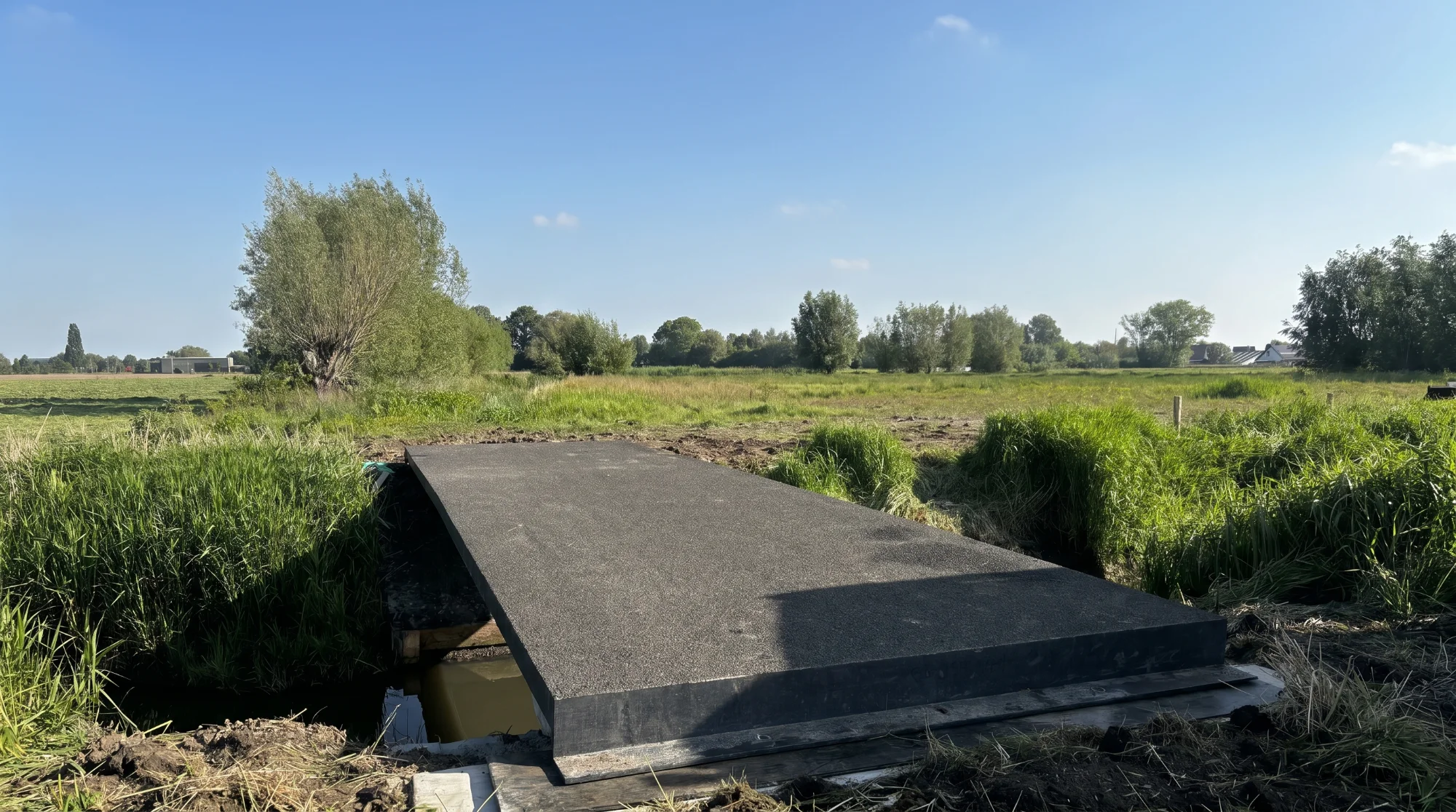
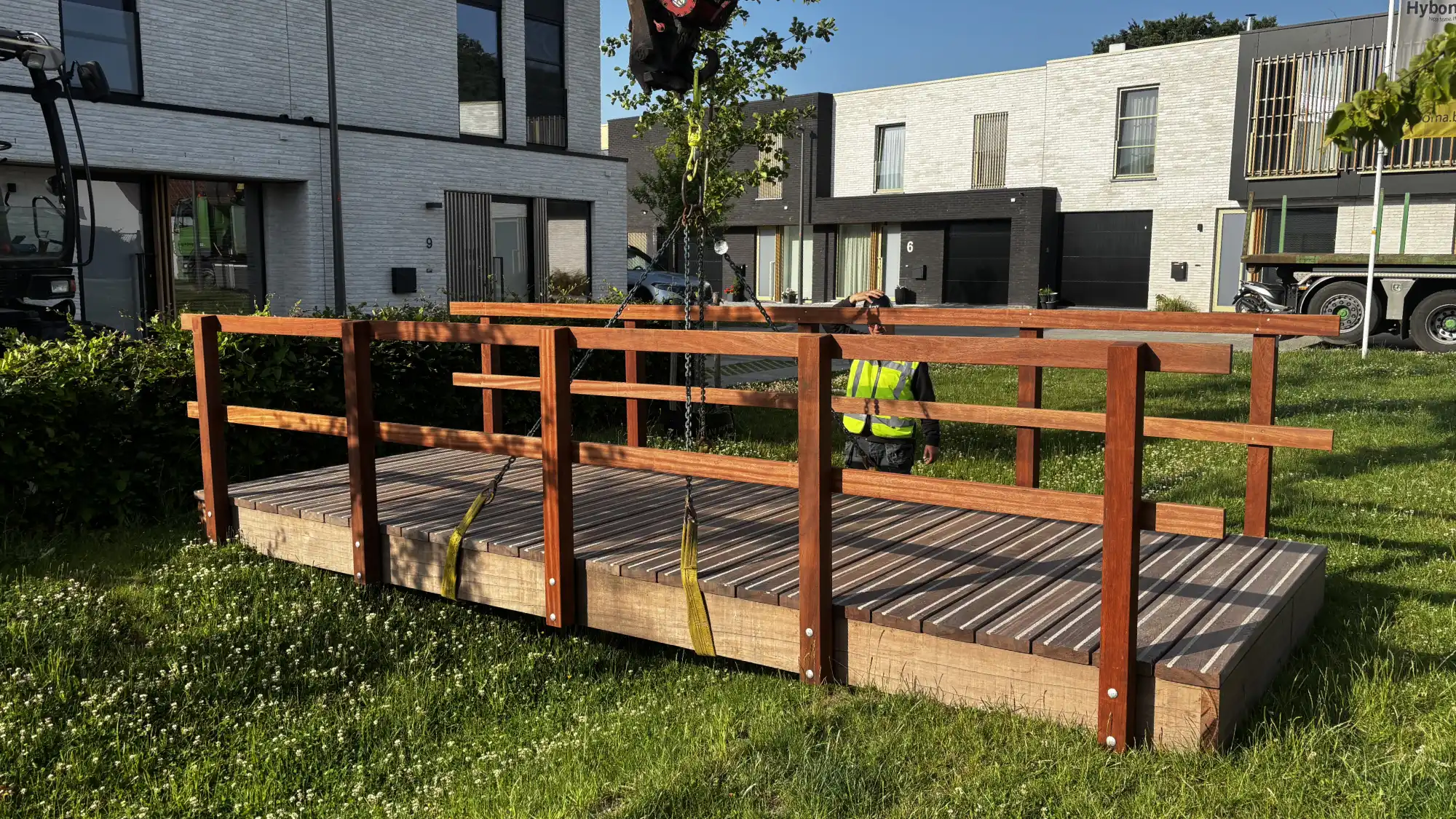
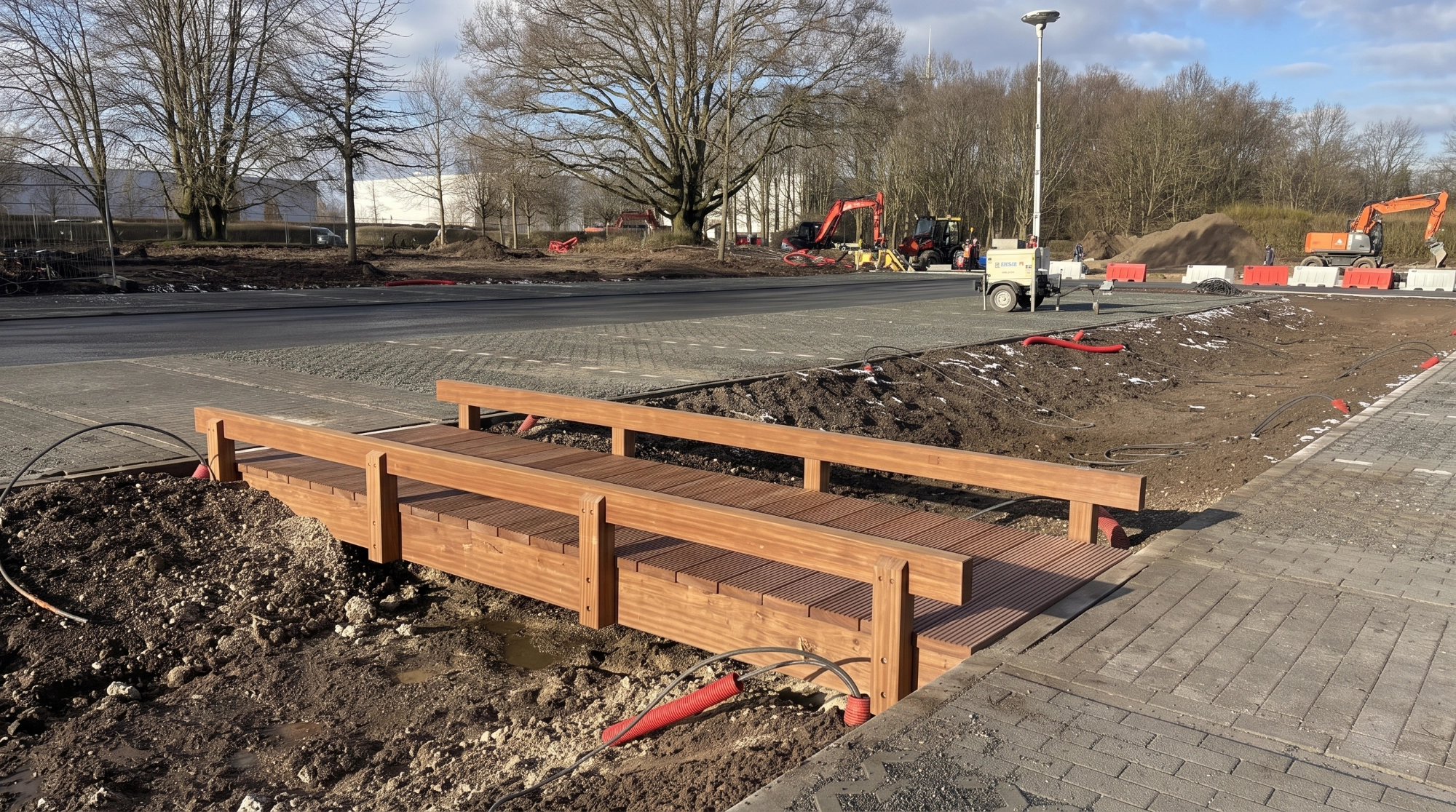
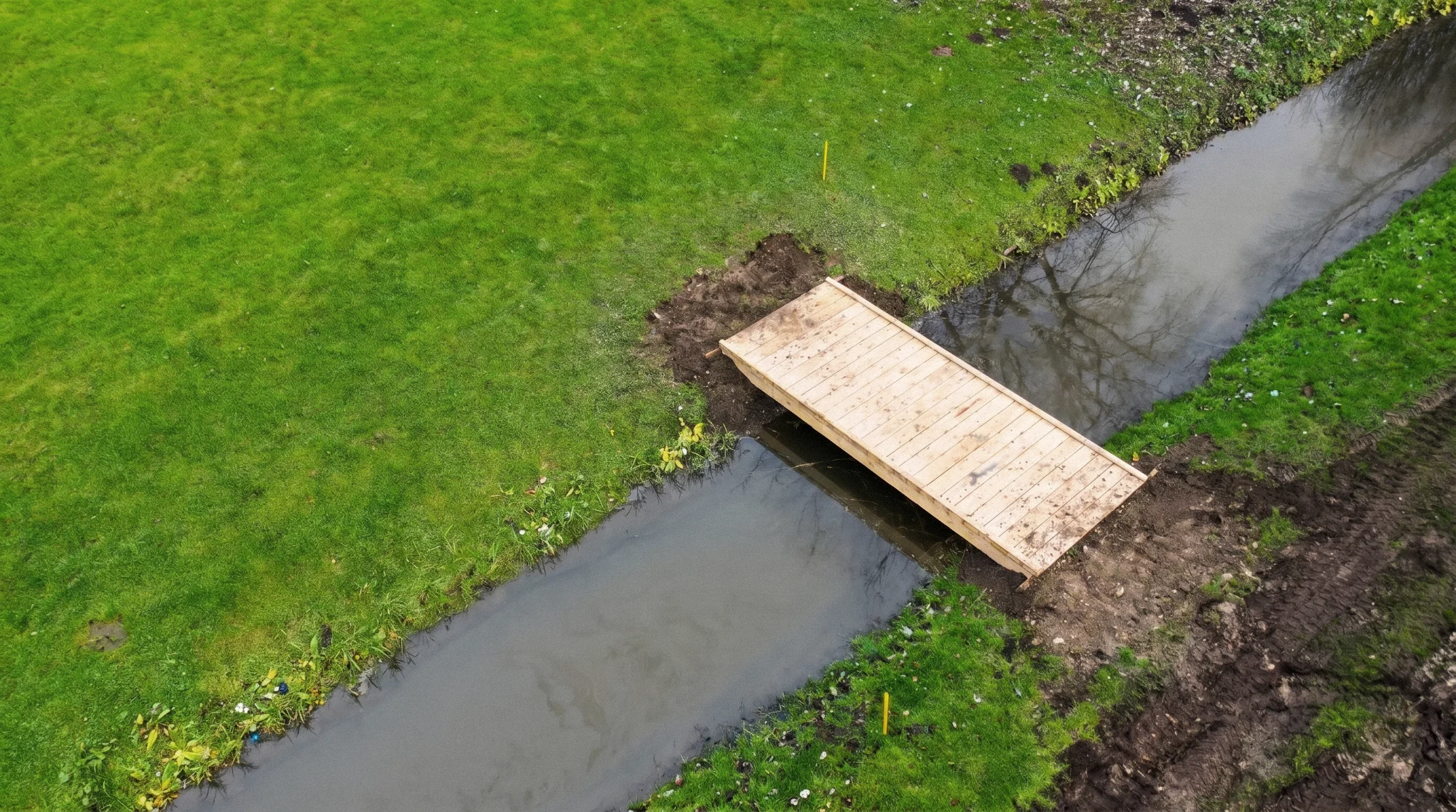
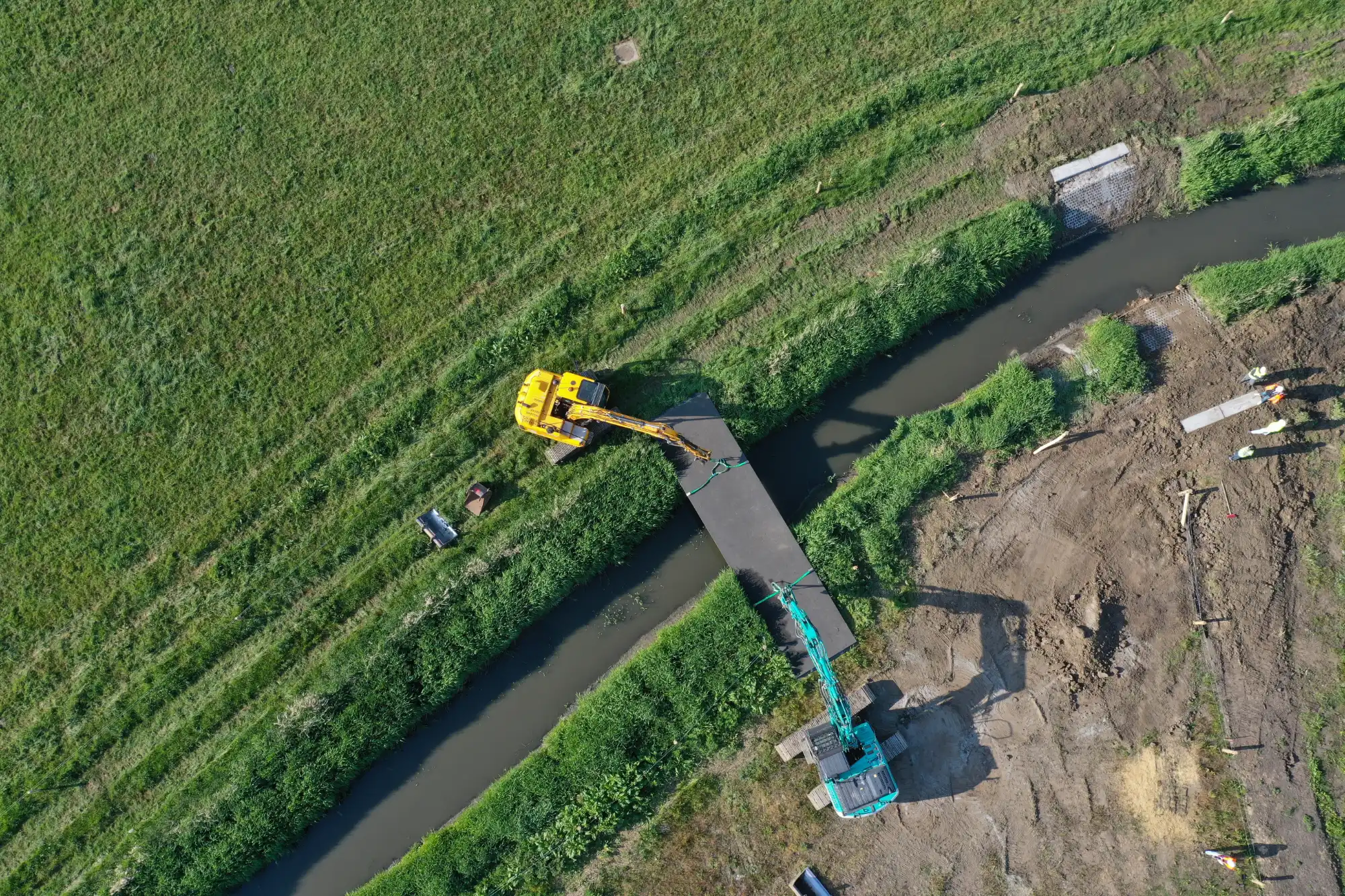
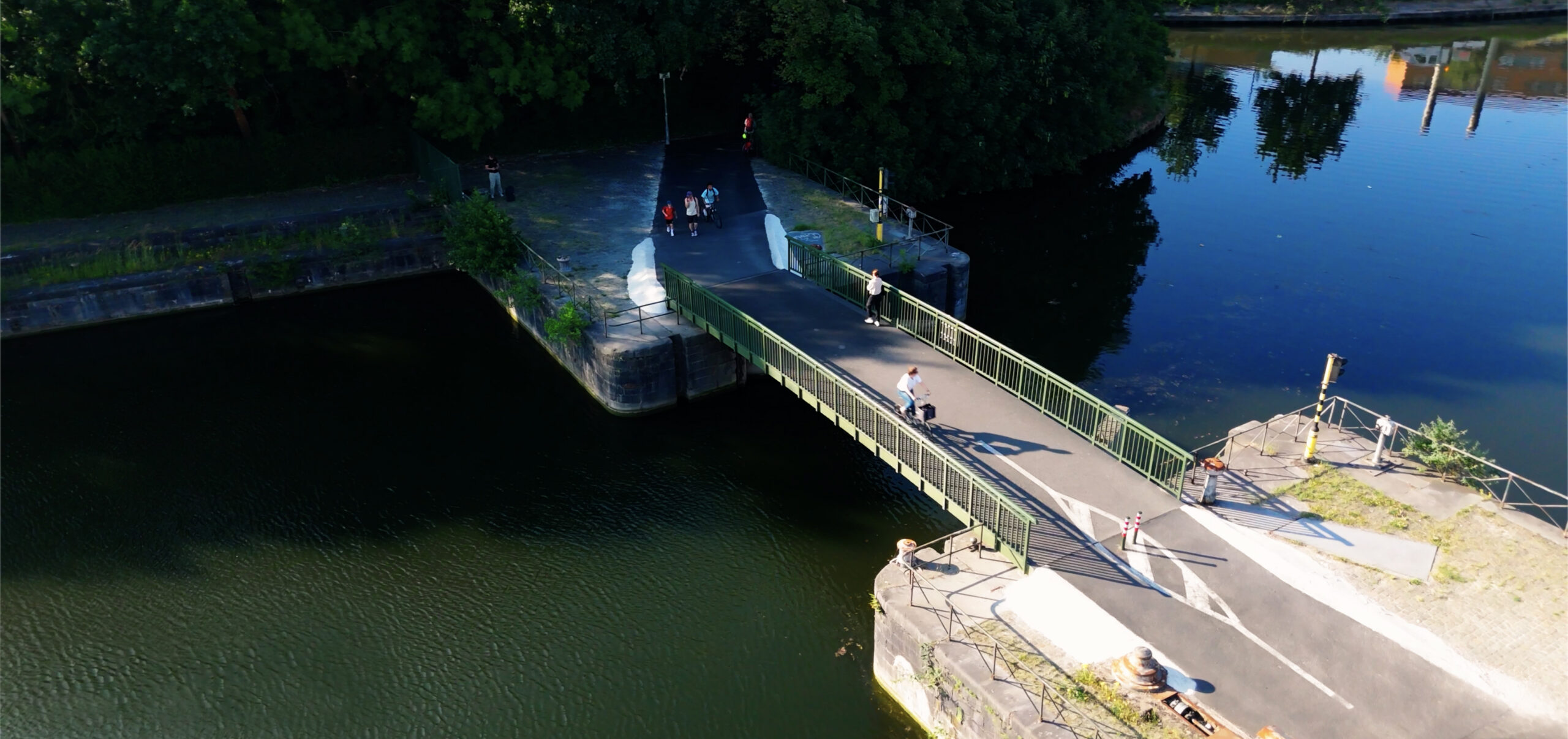
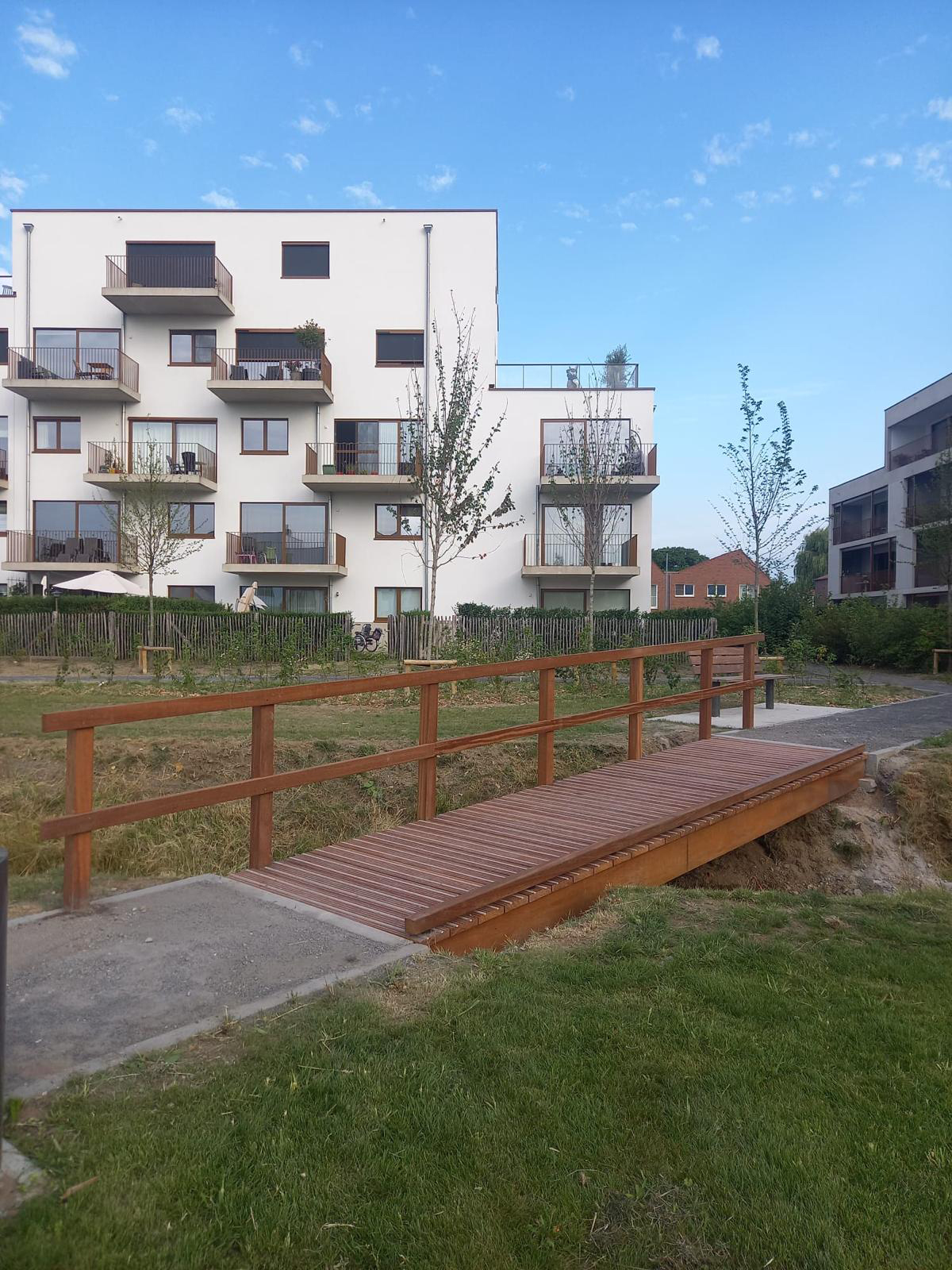
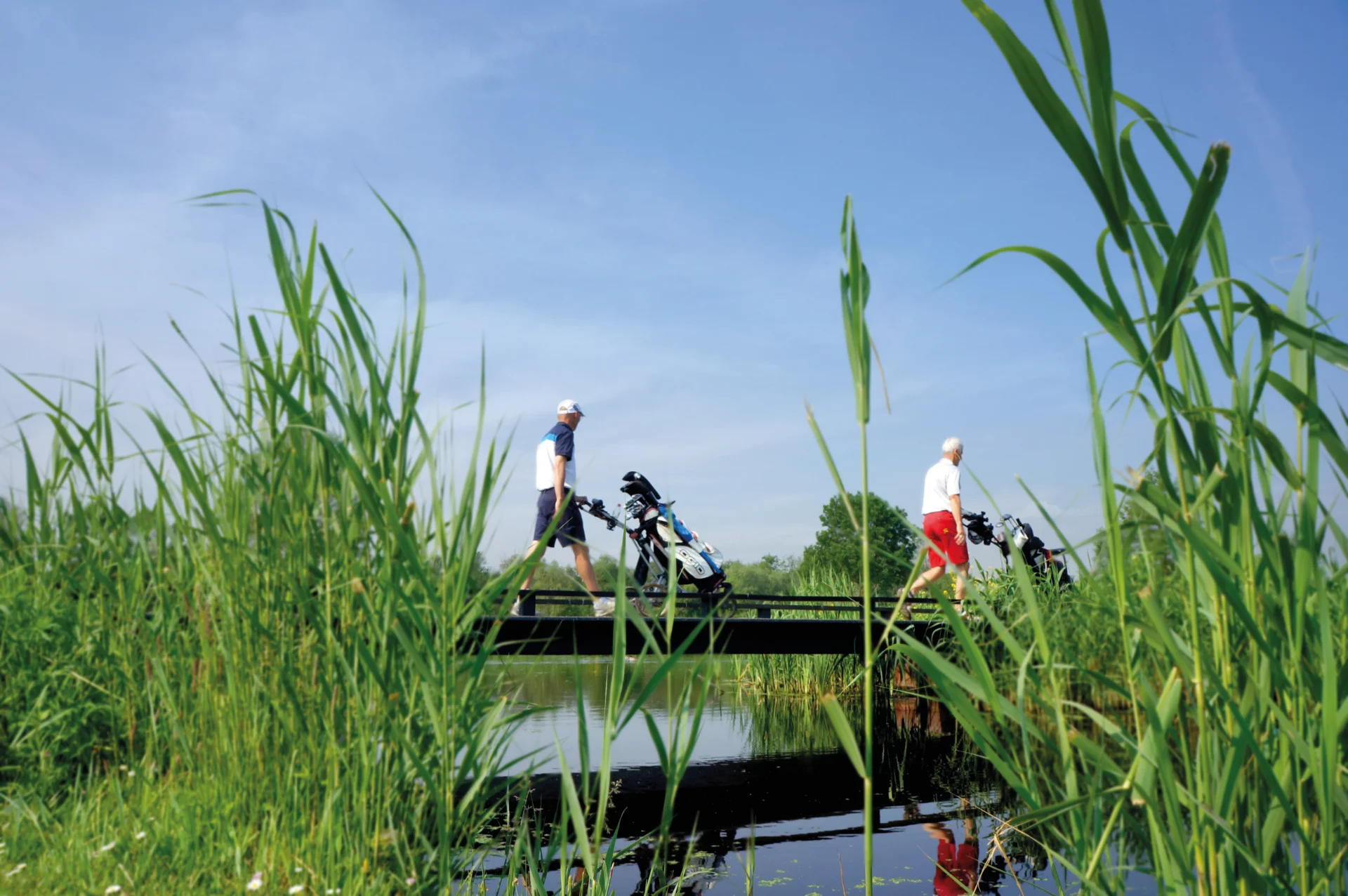
Every location has different requirements for a pedestrian bridge. That is why we design, engineer, manufacture, and install custom bridges made of composite, wood, and steel, tailored to the desired span, traffic volume, environment, and service life.
Applications
Complete a walking loop without taking a detour.
Make a day out even more special.
Connecting neighborhoods with one another.
A prominent location that should also be an eye-catcher.
A pedestrian bridge must be safe, comfortable, and accessible for everyone. That is why accessibility begins with the design. Slope gradients, approach lengths, resting areas, and the deck finish all contribute to the comfort of use. From the very first sketch, we work with you to design a bridge that meets current standards and is pleasant for every user.
Wooden, steel, or composite pedestrian bridges
Wood is a natural building material with a warm appearance that stores CO₂ as it grows. With the right choice of hardwood species, thoughtful design, and periodic maintenance, it offers a long service life and blends harmoniously into both natural and urban environments.
Composite is an innovative fiber-reinforced building material that does not rot, does not corrode, and requires little maintenance. Thanks to its low weight, long service life, and high durability, it is particularly well-suited for use in challenging environments.
Steel is a strong and versatile building material that is ideal for slender structures and long spans. Thanks to its high load-bearing capacity, proper preservation, and periodic maintenance, it offers a long service life and reliable performance.
BestBridges LAB evaluates your pedestrian bridge for feasibility, practicality, and cost.
Browse our portfolio of projects.
CompositePedestrian Bridge
Bicycle BridgeCompositePedestrian Bridge
Pedestrian BridgeStreet FurnitureWalkwayWood
Pedestrian BridgeSteel
LABPedestrian BridgeWood
CompositePedestrian Bridge
Pedestrian BridgeWood
Pedestrian BridgeSteel
Custom-designed pedestrian bridges?
Send us your preliminary design or idea. You’ll receive an initial assessment of feasibility and budget. This way, you can start the bidding process with fewer worries.
Are you having trouble figuring something out? Or do you have a question that isn’t listed here? We’d love to hear from you. Just get in touch with us.
There is no standard width for a pedestrian bridge. The optimal width is determined by its intended use, the desired level of accessibility, and whether the bridge is designed for pedestrians only or also for cyclists and maintenance vehicles. Thanks to our parametric design approach, you are not limited to standard dimensions. We quickly configure each bridge to fit your project, fully tailored to its functional and technical requirements.
The slope of an accessible bridge is determined in accordance with current accessibility guidelines. In every design, we strive to find the optimal balance between available space, user comfort, and regulations, so that the bridge is safe and comfortable for all users.
During the stability analysis, we analyze the dynamic properties and natural frequency of each bridge and tailor the design accordingly. In doing so, we take into account the span length, stiffness, the chosen material (steel, wood, or composite), and the expected use. This is a particularly important consideration for larger spans. In this way, we ensure that the bridge complies with the applicable design guidelines regarding safety and user comfort.
BestBridges always provides material-neutral advice and selects the solution that best suits the surroundings from a technical, aesthetic, and ecological perspective. Thanks to the wide range of materials and finishes available, wood, steel, composite, and hybrid solutions can all be seamlessly integrated into the landscape. The bridge’s appearance, slenderness, and design are often just as decisive as the material itself. For every project, we take into account the desired appearance, the span, maintenance, service life, and environmental constraints. Wood is often chosen for its natural appearance, while a composite or hybrid solution may be more advantageous from a technical or sustainability perspective in certain situations.
On average, we estimate 2 to 4 weeks for design, engineering, and structural analysis, followed by 4 to 12 weeks for production and delivery. Thanks to our parametric design approach, we can quickly configure various bridge options, giving the client insight into the design, technical details, and budgetary impact at an early stage. From design to installation, the total lead time is typically 2 to 4 months, with BestBridges handling the entire process from design and engineering through delivery and installation.
Comfort, safety, and lifespan as the starting point. A bicycle bridge requires more than a strong design. Comfort, safety, loads, and lifespan determine the quality of the bridge. That's why we design, engineer, produce, and install custom bicycle bridges in steel, wood, and composite, always with the most suitable material choice for your project.
The ideal solution. The modular steel-composite structure is prefabricated off-site and installed quickly, with minimal on-site time and disruption. Suitable for heavy traffic, in both temporary and permanent applications.
Walkways create safe and accessible passages in nature reserves, parks, and water zones, while protecting the ground beneath from erosion and damage.